New to therapy? Start here.
What therapy is, what it can change, and what actually happens when you sit down for your first session. No jargon.
What therapy can change
Therapy is time with a trained person who helps you understand what you're going through and gives you ways to handle it.

- Lying awake at 2 ambecomes
Sleep that comes easier
Less lying awake with racing thoughts.
- Spiralling over one emailbecomes
A clearer head at work
Better focus, fewer spirals over small things.
- The same fight, againbecomes
Calmer relationships
Fewer fights, and words for what you actually need.
- “Why do I always do this?”becomes
Knowing yourself better
Why you react the way you do, and what to do about it.
- Bracing for the next bad daybecomes
Tools for hard moments
Ways to handle worry, panic or low days as they come.
- Keeping it all to yourselfbecomes
Feeling less alone
Someone in your corner who listens without judging.
4×
the money spent on treating depression and anxiety comes back in better health and ability to work.
World Health OrganizationThings people tell themselves
Most people wait over a year before asking for help. Often it's because of one of these. Open one to see what's actually true.
“Therapy is for people who are in a crisis.”
Most people in therapy are dealing with everyday things: stress, worry, sleep, work and relationships. You don't need a diagnosis to start.
“Talking won't change anything.”
Therapy isn't just venting. Psychologists use tested methods, like CBT, that change patterns of thinking and habits over time.
“Asking for help means I'm weak.”
It takes self-awareness to notice something isn't right, and courage to do something about it.
“I should be able to handle this myself.”
Friends and family care, but they're part of your life and aren't trained. A psychologist sits outside it, with nothing riding on what you say.
“My family or office will find out.”
Sessions are confidential. Discreet mode keeps notifications neutral and locks the app, and you decide who can see your notes.
Your first session, minute by minute
It's 50 minutes, by video or audio, from wherever you feel comfortable. Here's what usually happens.
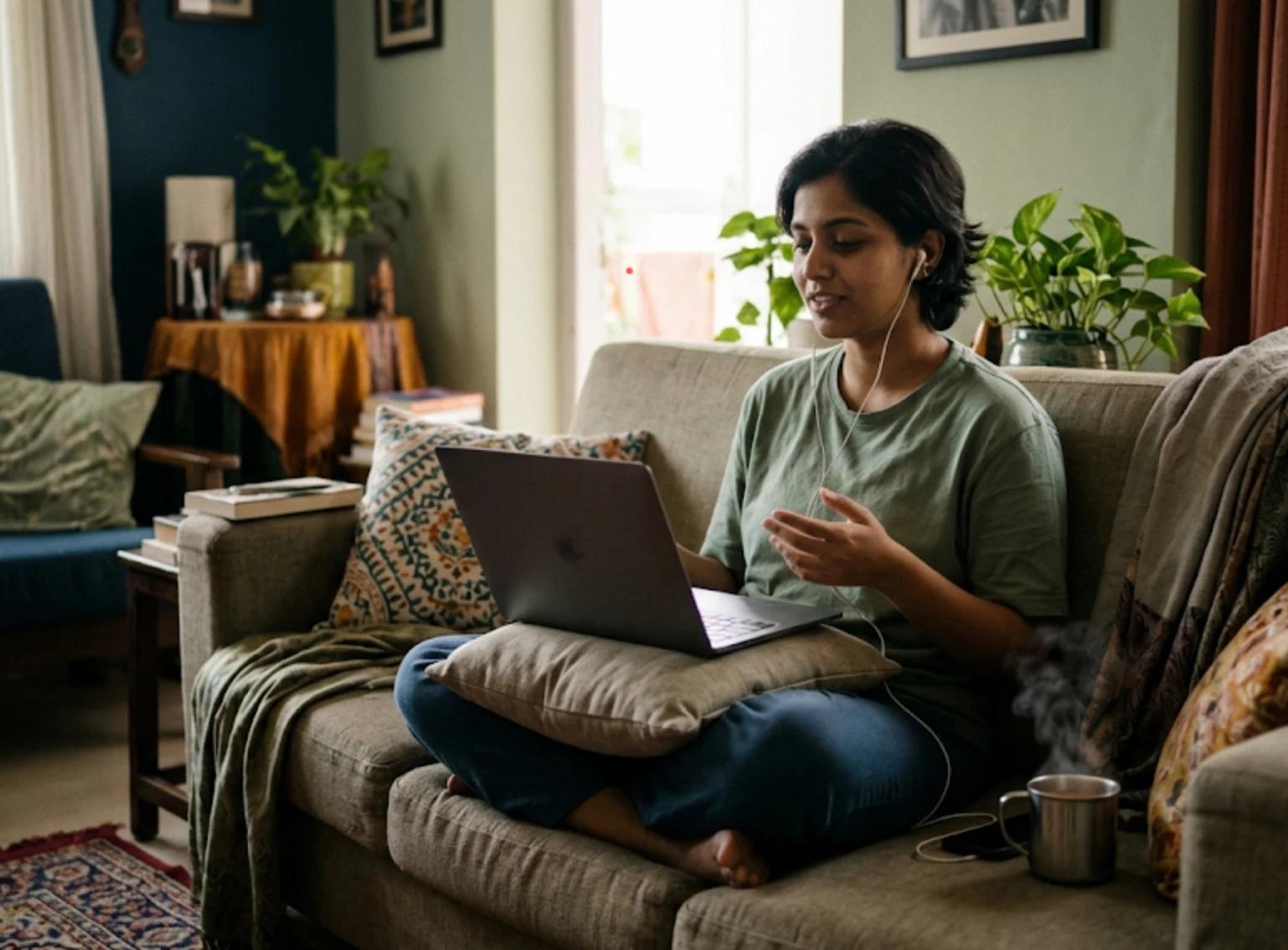
Before: find a quiet spot
Pick a psychologist and a time. Find somewhere private and use earphones. If you like, note one or two things on your mind.
First few minutes, 0–5 min
Getting to know each other
Your psychologist introduces themselves and explains what stays private, and the rare cases when it can't, such as a risk to your life.
Most of the session, 5–45 min
You talk, they listen
Share what brought you here, at your own pace. “I don't know where to start” is a perfectly good start. They'll ask questions to understand you.
Last few minutes, 45–50 min
Agree what's next
Decide together what to work on and how often to meet. If it doesn't feel right, you can switch to someone else for free.
People who got through it
Real people in India who shared their stories publicly to help others. They aren't TalkWillow clients; we've summarised their stories in our own words.
- P
Payal
Anxiety during her MBA
Fear of missing out had her saying yes to everything. Counselling helped her see the pattern behind the anxiety. She feels far less pressure to show up everywhere now, and has made peace with anxiety sometimes being part of life.
- M
A medical student
Anxiety in her first years of MBBS
Stress showed up in her body, with dissociation and fainting. Psychotherapy, breathing exercises and support from friends and family helped her trade perfection for consistency, and she made it through her first year.
- S
Samreen
Burnout, depression and panic attacks
She had to step away from work to recover. With her therapist, her doctor, her family, and a cat and a crochet hook, she rebuilt slowly. She later came off antidepressants while staying in therapy, and now works towards goals at a gentler pace.
- M
Manvi
Bipolar disorder, diagnosed at 16
Years of mood swings and guilt followed her diagnosis. A psychiatrist, therapy, medication and her family helped her learn her triggers and take back control. Today she teaches economics as an assistant professor.
Read their full stories at The Live Love Laugh Foundation.
Questions people ask
How do I know if I need therapy?
If something has been bothering you for a few weeks and it's affecting your sleep, work or relationships, it's worth talking to someone. You don't need a diagnosis or a crisis. The free self-check can help you put words to how you've been feeling.
Is the AI companion a therapist?
No. It is an AI wellness companion for self-help exercises and reflection. It does not diagnose, treat or give medication advice, and it points you to a psychologist or a helpline when you need a person.
Are my sessions recorded?
Only if you switch recording on. When you do, the recording is used to draft notes for your psychologist and is then deleted. You can have sessions without any recording.
Who can see my notes and history?
You and the psychologists you have given access to. You can grant or withdraw access for each psychologist from your sharing settings.
What's the difference between a psychologist and a psychiatrist?
A psychologist helps through talking therapy. A psychiatrist is a medical doctor who can also prescribe medication. Many people only need a psychologist; if you might need medication, your psychologist will tell you.